E23: Free trade, food prices in context, a century of plenty, 99 Stories of Progress and more:

Tony Morley, February 20th, 2026

“But progress is a choice. Making what is possible probable needs a new narrative. A story in which growth is good, plenty is achievable, and people are inspired to innovate and build.” — McKinsey Global Institute
Welcome to The Up Wing
You’re reading The Up Wing, Edition 23, progress and optimistic news and ideas, collated, curated, and delivered. We’re pro-growth, free markets, progress, techno-optimism, classical liberalism, and a better future for civilization. Help support our work by sharing Edition 23 on X/Twitter here:
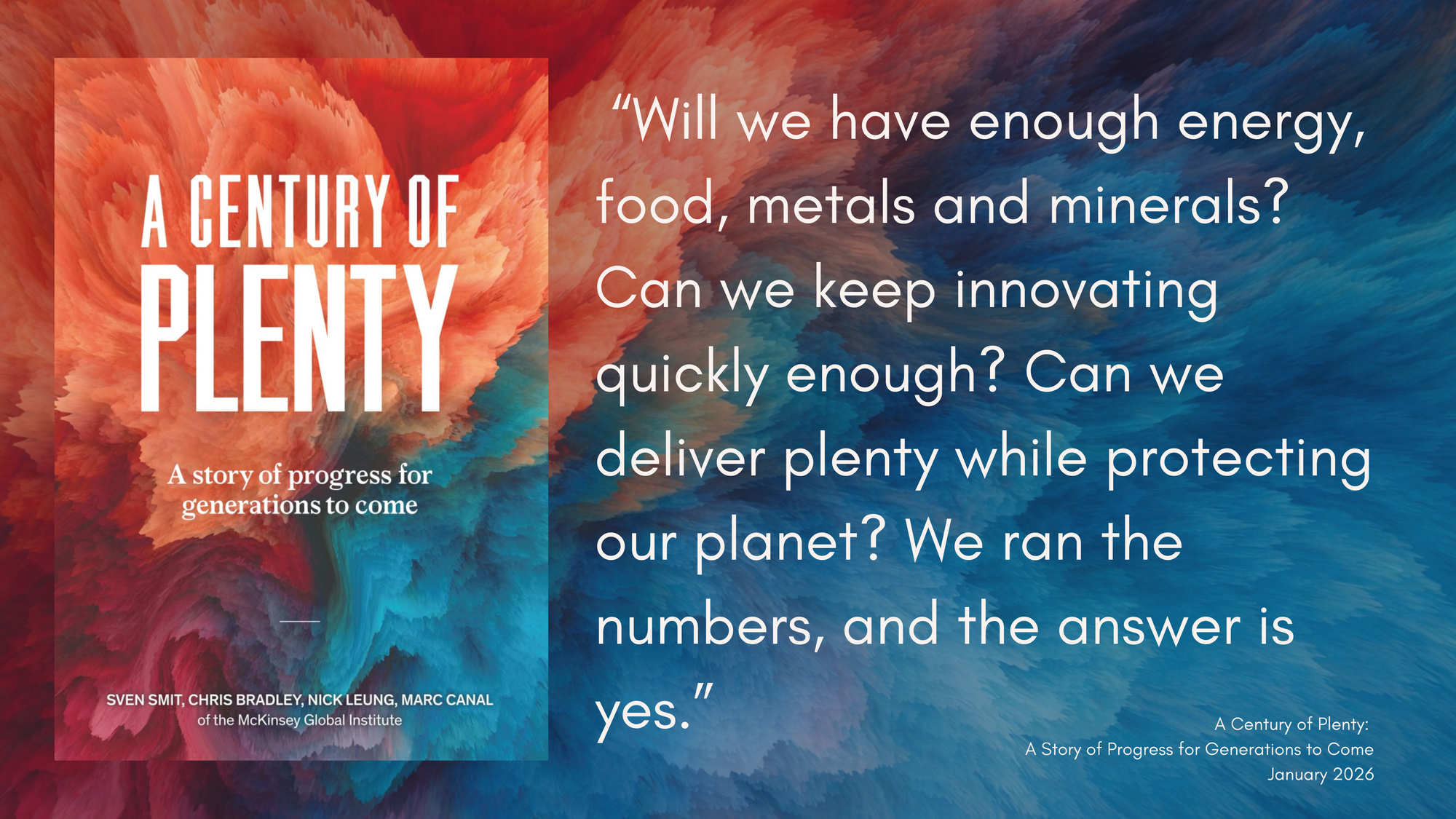
A Century of Plenty: A Story of Progress for Generations to Come
The team at McKinsey Global Institute just dropped a new book, A Century of Plenty, and it looks outstanding.
“Will we have enough energy, food, metals and minerals? Can we keep innovating quickly enough? Can we deliver plenty while protecting our planet? We ran the numbers, and the answer is yes.” — A Century of Plenty
“But progress is a choice. Making what is possible probable needs a new narrative. A story in which growth is good, plenty is achievable, and people are inspired to innovate and build.”
“Can you imagine even the poorest country in the world achieving the prosperity and quality of life of today's Switzerland—by 2100? Seems crazy, doesn't it? After all, we live in uncertain times. But we have pulled off marvels before.”
The Up Wing, Presenting TEDxHawkesbury, “It's Better Than It Looks”
Hey team, I'll be presenting at TEDxHawkesbury, Sydney, Australia, on April 18th, 2026. It's Brighter Than It Looks: Reasons to look forward to the future. The talk will expound just how far we've come in the last century, between 1926 and 2026, and why the future is brighter than it looks. An excerpt from the early draft of the talk's opening is included below.
 Tony Morley
The preparation, travel, and logistics for the not-for-profit event will be covered by me. If you'd like to support the delivery of the "It's Brighter Than It Looks" talk, you can do so here. Thank you kindly in advance.
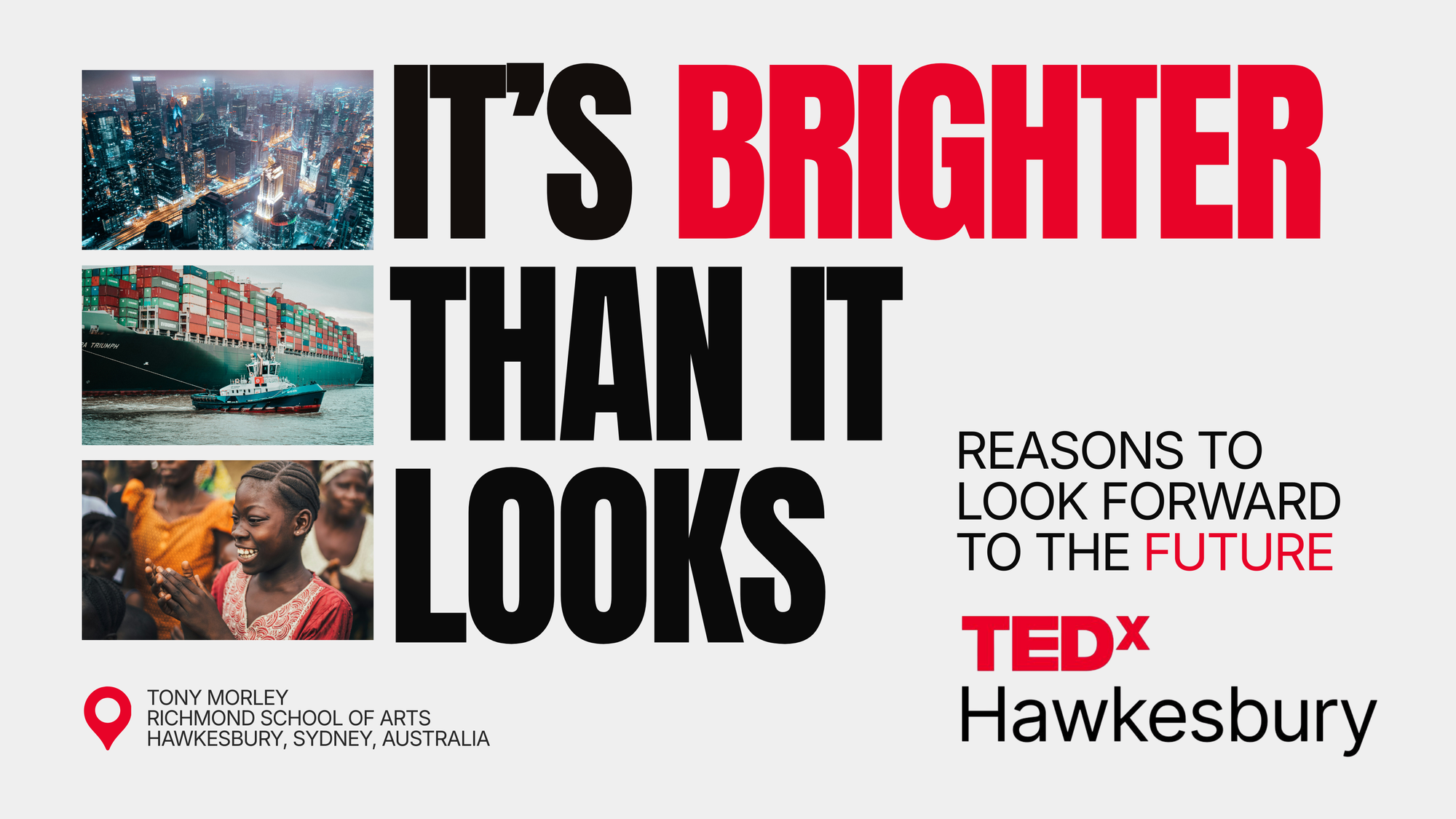
“Two hundred years ago, global extreme poverty was 86%; a hundred years ago, it was 66% — today, it’s roughly 10%.” — It’s Brighter Than It Looks
Capitalism—Now More Than Ever
The Capitalist Manifesto: Why the Global Free Market Will Save the World.1 It makes the definitive case for capitalism and repudiates common arguments offered against the system
 Michael A. Woronoff
“As Norberg observes, wealth inequality across the globe “is due to the uneven distribution of capitalism: people who have it become rich; those who do not have it stay poor.”
Why developing countries can't skip industrialization
“The notion that countries can skip industrialization is mostly wishful thinking.”
“The evidence shows that very few countries have developed without a strong, competitive manufacturing base. The reason is that services cannot replace what manufacturing uniquely provides: sustained productivity growth, innovation, trade, and the foundation for a strong economy.”
 Jostein Hauge
99 Stories of Progress from the Year of the Wood Snake
The team at Fix The News have dropped another colossal collection of progress stories, breakthroughs and human flourishing highlights. If you're not subscribed to Fix The News, you're missing out.
“These stories are gathered in nine themes, from improved human lives to the restoration of our living world, to cosmic revelations. May they offer uplifting sustenance with each bite.”
 Will Tait
What capitalism means – and what it doesn’t
Hot off the press from Jamie Whyte and CapX, a look at how the critics of capitalism continue to get wrong, both the definition of capitalism and its fruits.
“Selling daughters into marriage is a consequence not of capitalism but of poverty. And the poverty of the families involved is not a consequence of capitalism, either.”
“Selling daughters, slavery, financial crises – is capitalism really to blame for every ill?”
 Jamie Whyte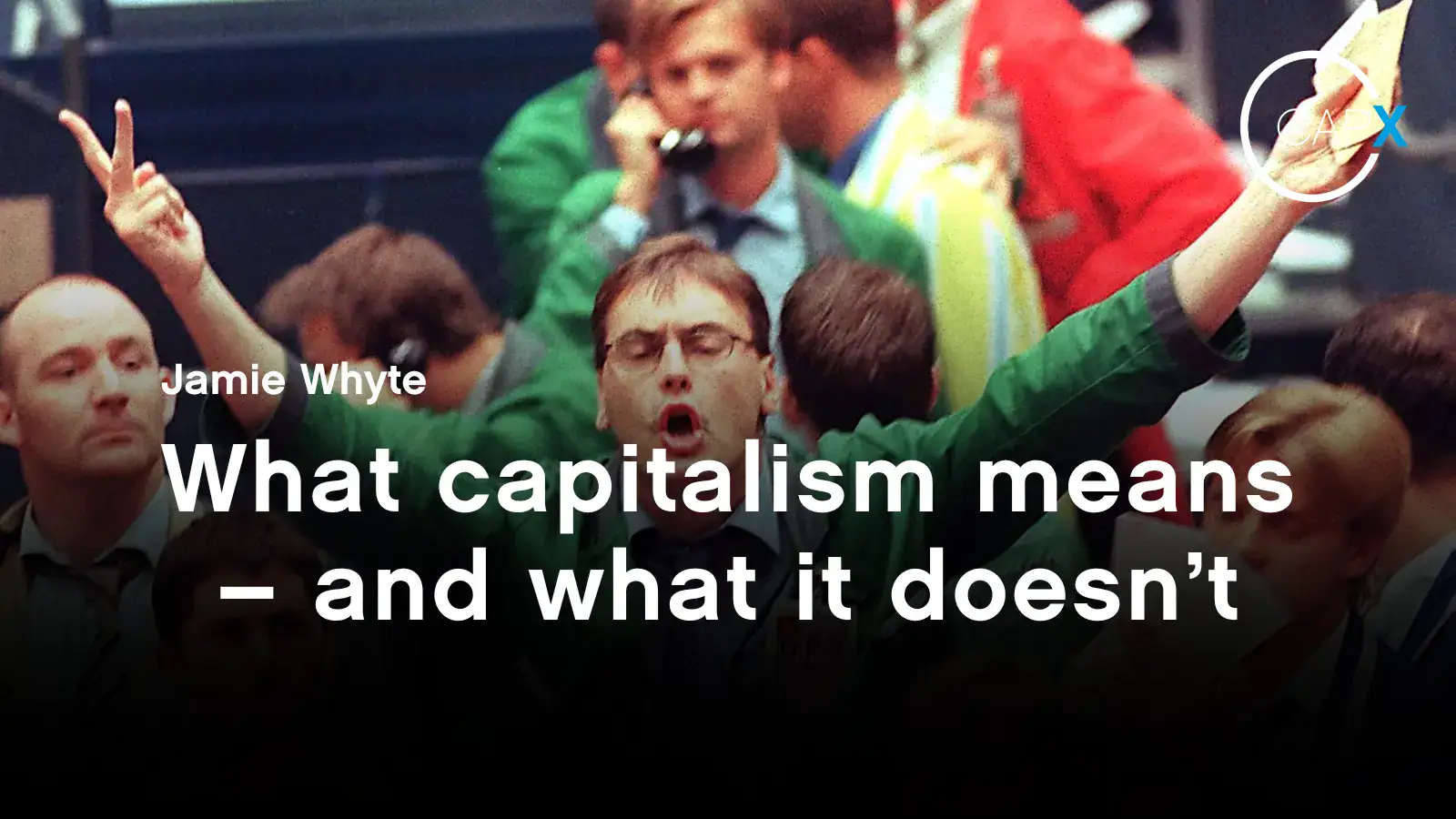
Free Trade Is Fairer Than You Think
“Free trade is often accused of being unfair and corrosive to democratic institutions, concentrating power in the hands of elites while leaving ordinary people behind. The evidence suggests the opposite.”
 Human Progress
“Participation in markets cultivates norms of fairness, impartiality, and trust that strengthen democratic institutions and expand individual rights.”
10 Breakthrough Technologies 2026
From sodium-ion batteries to next-gen nuclear, the team at MIT Technology Review dive into breakthrough technologies on the near-term horizon in 2026. Vote for the 11th breakthrough, I picked “uncrewed fighter jets”
“Our reporters and editors constantly debate which emerging technologies will define the future. Once a year, we take stock and share some educated guesses with our readers. Here are the advances that we think will drive progress or incite the most change—for better or worse—in the years ahead.”
Amy Nordrum
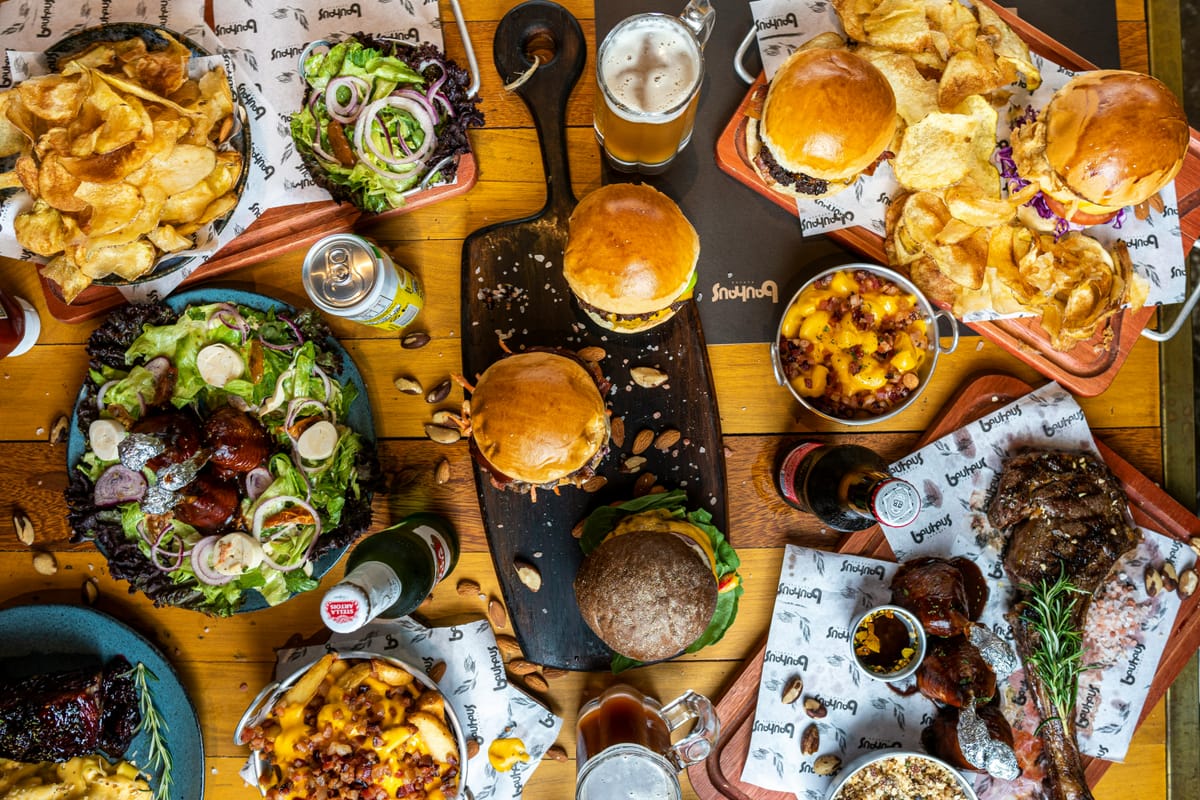
More food for less money, welcome to the agricultural progress of the last century
“The long, quiet decline from 42 percent to 10 percent is one of the most consequential economic trends in American history, one that has as much to do with Americans getting richer as it has to do with the price of food. But almost nobody talks about it.”
“The fact that the average American family can feed itself on roughly a tenth of its income — something that would have seemed like science fiction to Ernst Engel, poring over those Belgian household budgets in 1857 — is a genuine civilizational achievement.”
 Bryan Walsh
“In 1901, when the Bureau of Labor Statistics conducted its first major household expenditure survey, the average American family spent 42.5 percent of its budget on food — not on food and housing and everything else, just food. At today’s median household income, that would be the equivalent of roughly $2,600 a month going to the grocery store.”
“It seemed that the richer you got, the smaller the share that went to eating.”
The Great Crime Decline Is Happening All Across the Country
Despite the news running an endless campaign to convince us that crime in America is out of control, in most places, on average, the crime rate is falling, particularly for homicides.
“Even cities with understaffed police departments have made record gains.”
“America experiences a once-in-a-lifetime improvement in public safety despite a police-staffing crisis. In August, the FBI released its final data for 2024, which showed that America’s violent-crime rate fell to its lowest level since 1969, led by a nearly 15 percent decrease in homicides—the steepest annual drop ever recorded.”
 Henry Grabar
Economic development is the surest path to climate resilience
“Broad and sustained economic development is the most reliable predictor of a country’s ability to cope with a climate shock.”
Economic growth has always been, and it will remain into the foreseeable future, the principal driver of improved living standards, for rich countries and poor alike.
 Indermit Gill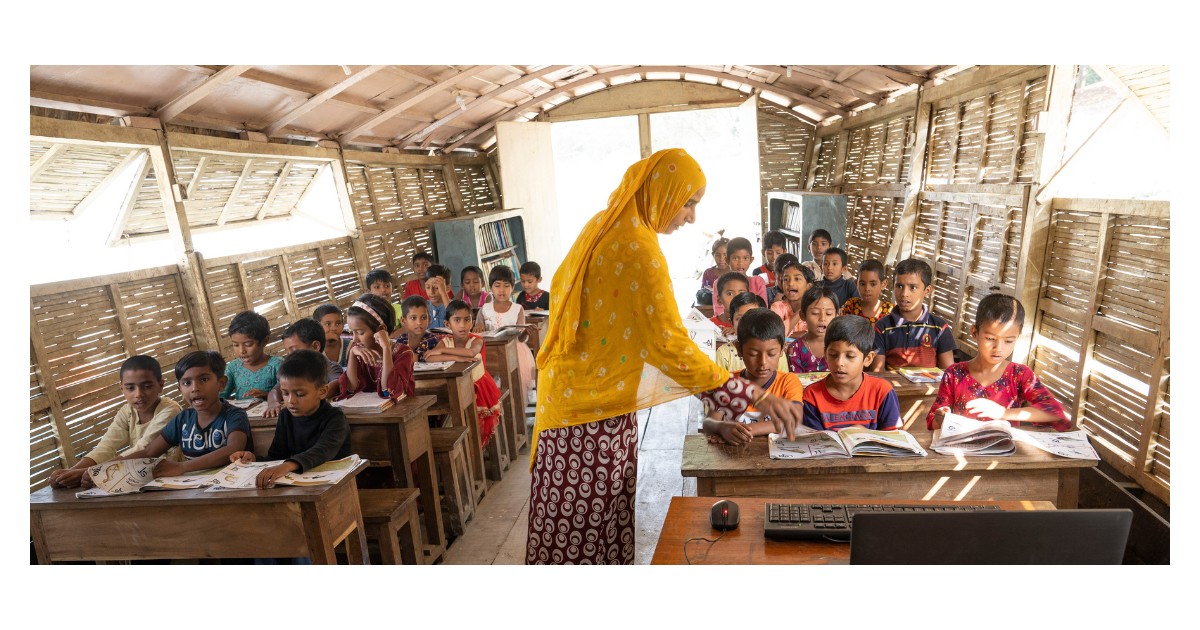
Pax Economica: The forgotten history of the free-trade movement
Free trade remains one of the most powerful tools for driving economic growth, reducing poverty, and improving living standards, yet for much of the last 200 years, most people have taken it for granted. Today, in 2026, the risk of turning our back on trade could be of considerable global consequence.
“Palen says he wrote Pax Economica not only to highlight free trade’s often overlooked potential for social change but also to expose the dangers of protectionism, which is currently making a strong comeback due to worldwide surges in nationalist sentiments.”
 Tim Brinkhof
A list of other catastrophes that are probably fake
From 5G to the supposed disappearance of the American middle class, and from AI to the loneliness epidemic, many of the proposed reasons for fear and doom haven’t turned out as apocalyptic as the proponents have proclaimed.
“This makes me wonder what other big widely talked about catastrophes are fake.”
 Andy Masley
Hey team, Tony here. Can you help support The Up Wing mission? 80% of our readers are currently free subscribers; please consider supporting our mission and newsletter here: Support The Up Wing, or help support the project by liking and sharing our Edition 23 post on X/Twitter.