
E25: Economic growth and happiness, raising IQ with salt, child mortality down 60% since 1990, and more:


Tony Morley, March 31st, 2026

“When lawmakers believe the world is growing less fair by the day, they reach for bigger government as the default response. But if the real goal is upward mobility, opportunity, and a decent life for regular people, the biggest obstacle is not “the rich.” It is the policy machinery that blocks competition, inflates costs, and quietly transfers wealth toward the politically connected.” — Vance Ginn
Welcome to The Up Wing
You’re reading The Up Wing, Edition 25, progress and optimistic news and ideas, collated, curated, and delivered. We’re pro-growth, free markets, progress, techno-optimism, classical liberalism, and a better future for civilization. Help support our work by sharing Edition 25 on X/Twitter here:
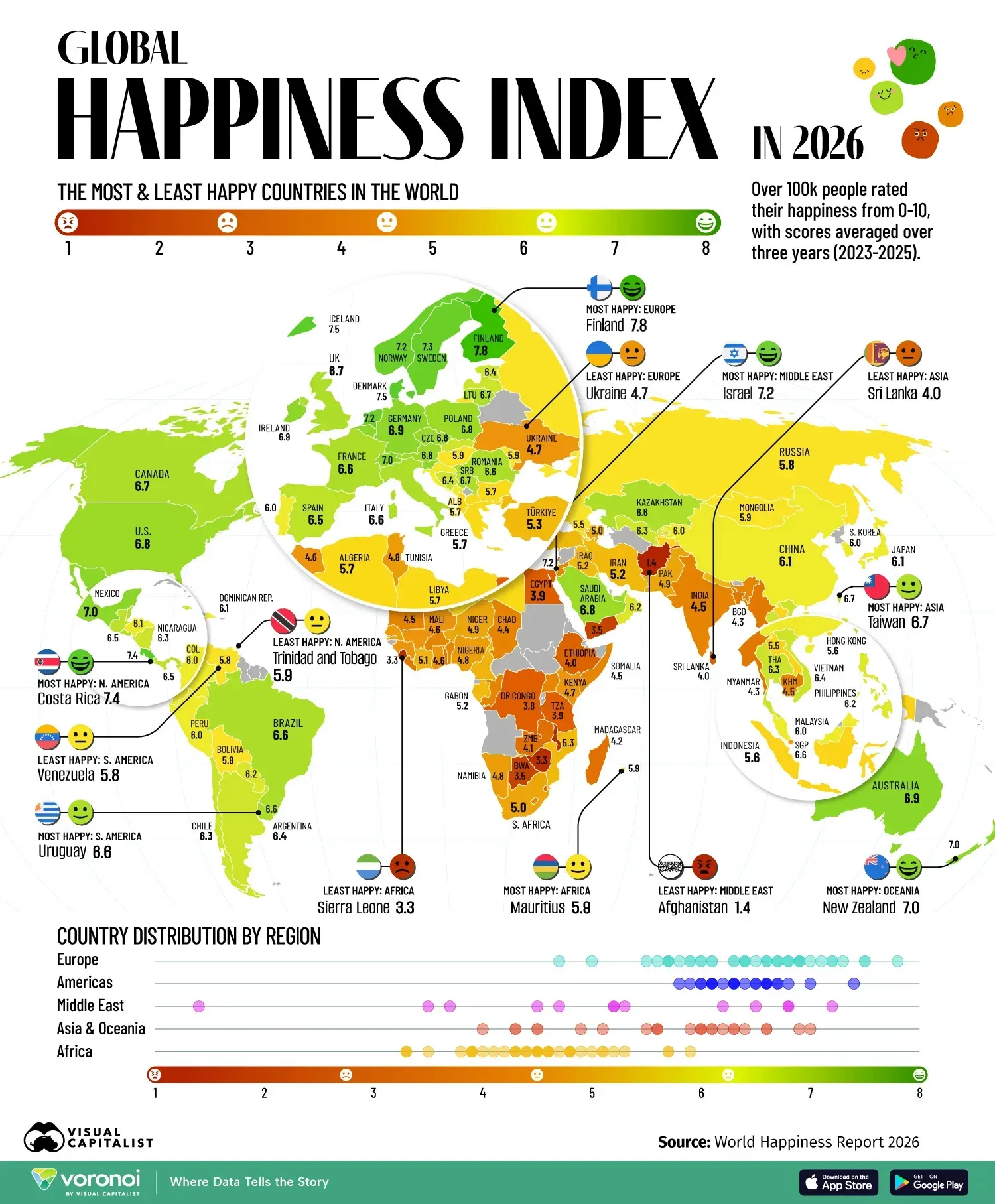
Mapped: The Happiest Countries in the World
They say "money can't buy happiness" in 2026, but it unquestionably buys the things that provide happiness. From longer life expectancy to lower child mortality, and higher material living standards — more abundance equates to higher happiness, few exceptions.
Ranking at the very bottom of the list: Botswana, Zimbabwe, Malawi, Sierra Leone and Afghanistan — where life expectancy is 15 years lower than the United States, and child mortality is more than eight times higher. Source: Visual Capitalist
If you care about happiness, well-being, or growth, you should care about GDP.
Bhutan prioritised “happiness,” South Korea, economic growth. South Korea pulled ahead in living standards, from life expectancy to child mortality, and from poverty to subjective happiness. Can money and economic growth buy happiness? Yes it can.
“Life expectancy rose from 54 in 1960 to 66 by 1980 to 83 today, a decade higher than in Bhutan. Infant mortality fell by roughly 97 percent.”
 Brian Albrecht
Stop Lamenting Inequality—Start Questioning Bad Policy
When the government gets out of the way of progress, prosperity and mobility, living standards rise, and citizens flourish.
“A recent Economist graphic, in the article “The world is more equal than you think”, underscores something many people do not want to say out loud: global living standards have been converging, meaning poorer countries have been catching up in ways that matter for real life.”
 Vance Ginn
“Global inequality has narrowed and the poor are gaining ground. If the system feels rigged, we should look to government policies that suppress competition and reward insiders.”
“When lawmakers believe the world is growing less fair by the day, they reach for bigger government as the default response. But if the real goal is upward mobility, opportunity, and a decent life for regular people, the biggest obstacle is not “the rich.” It is the policy machinery that blocks competition, inflates costs, and quietly transfers wealth toward the politically connected.” — Vance Ginn
The Easiest Way to Make the World Smarter
Iodized salt was an incredible human progress breakthrough, improving global health and lifting average IQ scores everywhere it's been embraced; so why is this innovative technology losing converts?
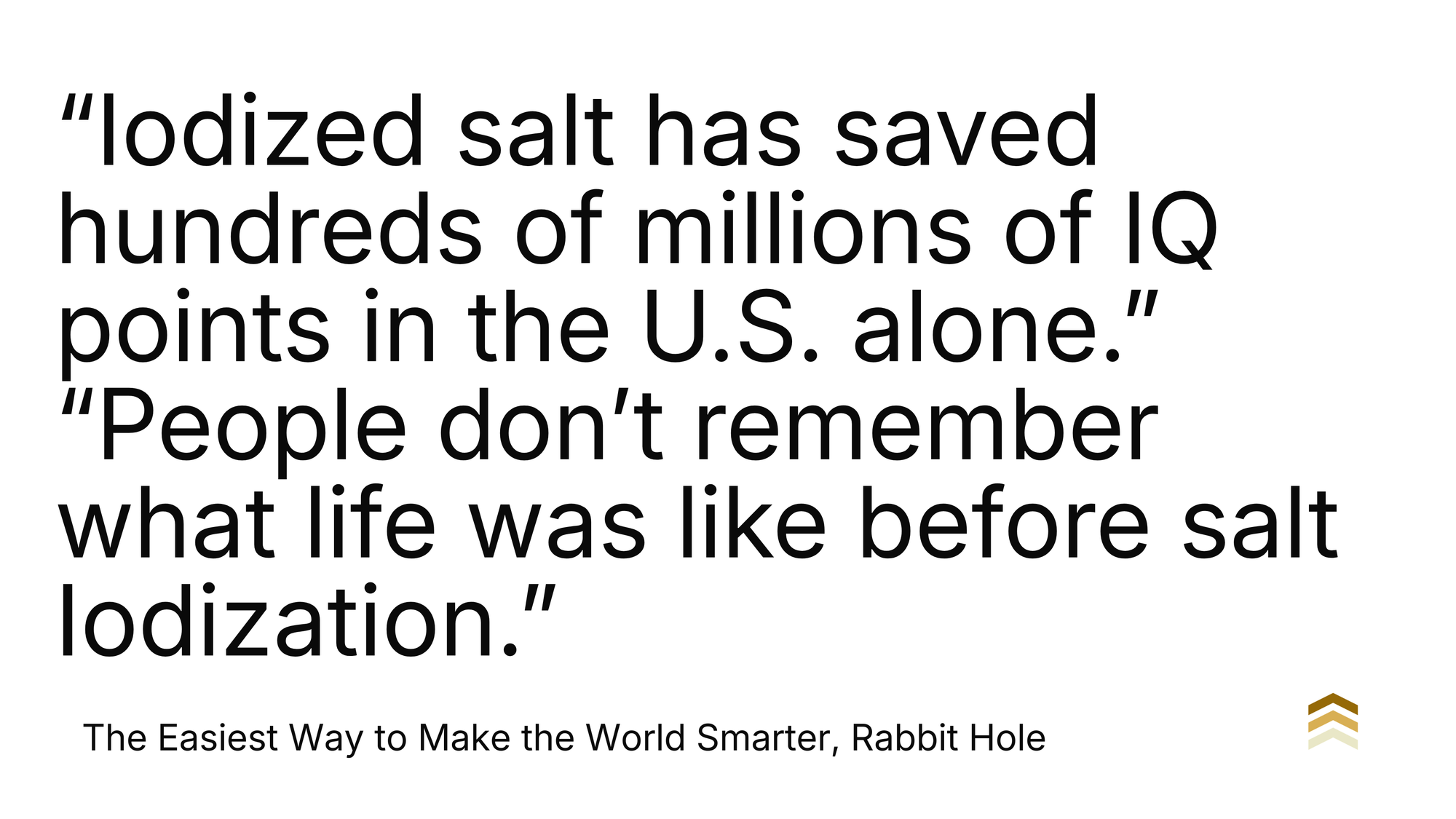
“Iodized salt has saved hundreds of millions of IQ points in the U.S. alone.” “People don’t remember what life was like before salt Iodization.”
“Doctors don't only crown iodine deficiency as the most preventable cause of intellectual disability, but iodine sufficiency as the best thing we can do for global general intelligence. All for 5 cents per person per year.”
Growth Is All You Need
How development economics forgot the most important thing.
It's economic growth, stupid. Economist's trope it may well be, but when it comes down to it, a rising tide of economic growth lifts, on average, all boats.
“The data is the data, and what it says is simple: economic growth is not merely necessary for human wellbeing. In any plausible accounting, it is human wellbeing. People get the basics when countries get rich. No exceptions.”
 Quico Toro
Why No One Understands Taxes
The average American is very confused about how taxes work, who pays for them, and what impact our understanding, or lack thereof, has on how we vote and what policies we support.
“In 2022, the top 50 percent of earners … paid 97 percent of federal income taxes. And the top one percent alone paid over 40 percent.”
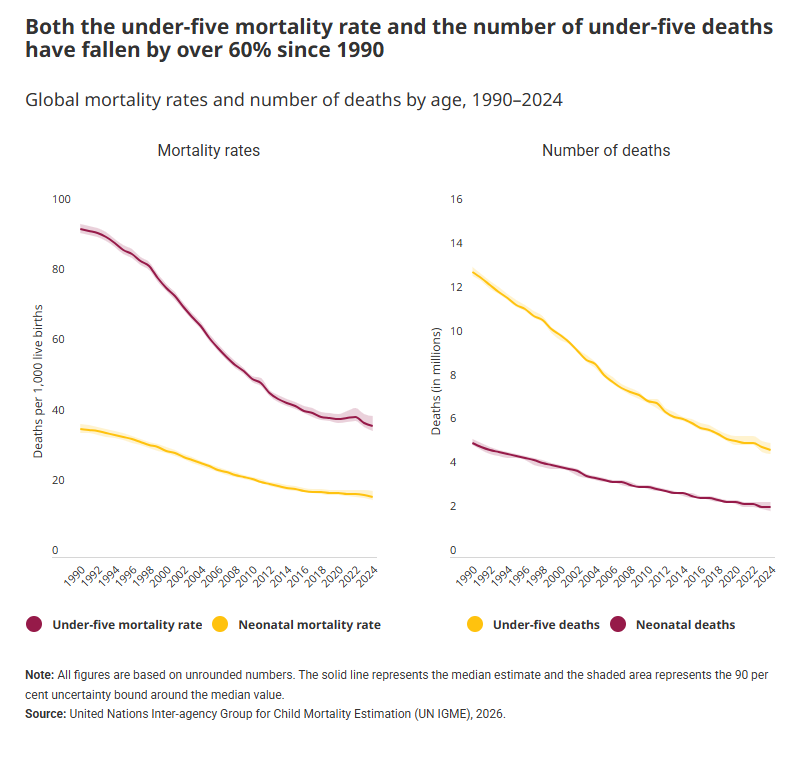
Both the under-five mortality rate and the number of under-five deaths have fallen by over 60% since 1990
Child mortality has fallen dramatically, over the last 200 years, as I wrote in “How child mortality fell from 40% to 3.7% in 200 years” for Big Think — but what many don't realise is how much progress has been made since just 1990.
“Since 1990, the world has made remarkable progress: the under five mortality rate has fallen by about 60 per cent, and neonatal mortality by 45 per cent, saving millions of young lives. These gains reflect decades of investment in immunization, essential health services, newborn care, nutrition support and the integrated management of childhood illnesses.”
India's cheap weight-loss drugs could reshape global obesity fight
Generic GLP-1 drugs like Ozempic or Wagovy are coming to India, and it's going to give millions access to this breakthrough medical treatment at a price that's within reach.


“This will allow domestic pharmaceutical companies to release cheaper copies or generics, triggering a rush of competition that could slash prices by more than half and rapidly expand access for people in India, and eventually in other countries too.”
The left is still wrong on population and progress.
The left has never been right on population, environmentalism, or progress, perpetually crying "the sky is falling." While Paul Ehrlich's ideas are now behind us, there are still countless proponents of the dangerous idea that the world would be a better place with less people. It wouldn't, it isn't, and it hasn't ever been.
“The first thing that has to be tried is a governmental program of propaganda. The president simply announcing that it’s stupid and irresponsible to have more than two children.” — Paul Ehrlich, 1968
“He wanted sterilization programs and taxes on large families which would rise with every extra child born to a couple” “What is especially remarkable about Ehrlich is how he was lionized by the left in spite these fascistic proposals.”
 Ross Clark
Hey team, Tony here. Can you help support The Up Wing mission? 80% of our readers are currently free subscribers; please consider supporting our mission and newsletter here: Support The Up Wing, or help support the project by liking and sharing our Edition 25 post on X/Twitter.